

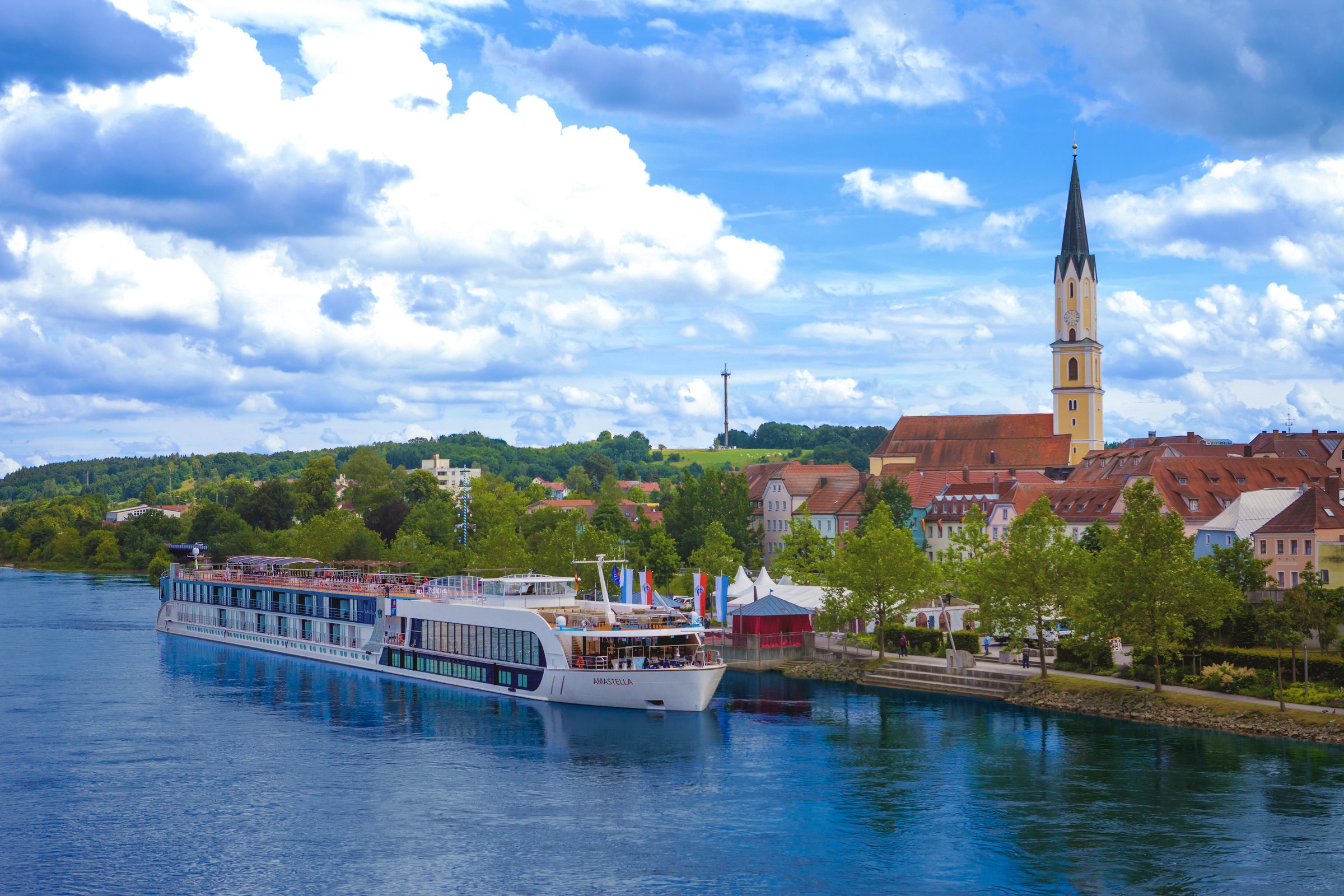
The first evening on board, I looked up from dinner and realized we were moving. I hadn’t felt a thing. No sway, no hum of engines beneath my feet, nothing to tell me the ship had left the dock except the view outside the window sliding slowly by. That moment told me everything about why people fall in love with river cruising. It is quiet in a way that surprises you.
I had never done a river cruise before this trip through Europe with AmaWaterways, and I went in with the same questions most first-timers have. What is it actually like. Will I be seasick. Will I be bored. Will it feel like every other cruise I have avoided for years because I do not love crowds or being herded from one buffet line to the next. What I found instead was one of the most restorative, connected, and genuinely surprising trips I have taken, and I want to walk you through it, both the practical details and the parts that stayed with me.
A Ship So Calm You Forget You Are Moving
River cruise ships sail inland waterways, not open ocean, so there is no swell and nothing resembling the rolling motion people associate with seasickness. Land is visible on both sides the entire time. You are essentially gliding through the countryside rather than crossing it, and after a few days I stopped even registering that we were floating at all. If seasickness has ever kept you from considering a cruise, this is the detail that changes the conversation. It simply is not that kind of boat.
Our ship carried about a hundred guests, and that number shaped the whole experience more than I expected. There was room to be completely alone if that was what I wanted. I could sit on the upper deck in total silence with a book and nobody would interrupt me. Or I could walk down to the lounge before dinner and fall into conversation with people from three different countries within minutes. The ship held both moods at once, and I got to choose which one I needed on any given evening. That is not something I associate with cruising at all, and it became one of my favorite parts of the trip.
Our stateroom had twin beds and more storage than I expected for a boat that size, but the real highlight was the balcony. AmaWaterways is known for a twin balcony design, one wall that is essentially a floor to ceiling window paired with a sliding glass door and a small step out balcony with two chairs. We spent so many quiet mornings out there with coffee, watching towns and vineyards and old stone bridges pass by at a pace slow enough to actually take in. If you are choosing a stateroom category, I would tell every one of my clients to prioritize that balcony. It changes how present you feel on the water.
The Locks Still Get Me
Somewhere in our route we passed through fourteen locks in a single stretch, and I could have watched it for hours. Watching a massive vessel rise or lower to match the water level on the other side, engineered decades ago and still working exactly as intended, was one of those small wonders that catches you off guard. It is not a headline excursion. Nobody puts it on a brochure. But it became one of the moments I keep describing to friends, because it captured something true about river cruising in general: the destination matters, but so does everything happening quietly along the way.
Food, and What It Means to Travel Well With Celiac
I have celiac disease, which means every meal on a trip usually requires some negotiation. On this cruise it required almost none. Most of the menu was naturally gluten free, and every night the staff asked if I wanted anything adjusted, especially for dessert. The pastry chef made me versions of whatever everyone else was having, along with puddings and cookies I would not have expected a ship’s kitchen to produce for one guest with dietary restrictions. At the evening happy hour, there was always a separate plate of gluten free snacks set aside for me and the handful of other guests managing food sensitivities. I did not feel like an exception being accommodated. I felt taken care of, the way you hope to feel and rarely do when traveling with a restriction like mine.
That same ease extended off the ship. Restaurants across the towns we visited in Europe were remarkably fluent in gluten free dining, more so than I expected. It changed how I think about recommending European travel to clients who manage food allergies or sensitivities. It is far more possible than people assume.
AmaWaterways also includes something many first-time guests do not realize is complimentary. The Chef’s Table is a multi-course dining experience on board that on many other cruise lines would carry an extra charge. Here it is simply part of what you booked, provided you reserve a spot once you are on the ship. Combined with the daily happy hour, where wine, beer, and cocktails are included beyond the standard mealtime pours, it becomes clear how much of the experience is already built into the price. Excursions, most alcohol, gratuities in many cases, and every meal are typically included with river cruising in a way that ocean cruising rarely matches. It is worth asking directly what is and is not covered before you book, because it varies by line, but AmaWaterways is generous with what comes standard.
Excursions, Walking Levels, and Doing Your Own Thing
Every port had a menu of options, not a single mandatory tour. Guided walks were divided into gentle, regular, and active groups so that people with very different fitness levels and interests could each have a good day. I chose active every time, which usually meant longer distances and a faster pace, and one of my favorite days was biking through small European towns with a local guide. I felt like a kid again out there. Hiking to a countryside winery was a close second.
Here is something I wish more first-timers understood before they book. You are never required to take the included excursions. If you would rather explore a town on your own, or you have read about one very specific thing you want to see, you can absolutely do that instead. I rarely ate lunch on the ship, because I preferred to find a restaurant in whatever town we had docked in that afternoon. In Strasbourg, that meant a meal at La Cloche a Fromage, a restaurant known for the largest cheese dome in the world and a stop that has been featured on The Amazing Race. Moments like that are the reward for river cruising’s smaller ports. You get access to towns that larger ships and bigger crowds simply cannot reach, and there is real freedom in choosing your own path through them when you want to.
When the River Has Other Plans
River water levels shift with rainfall and snowmelt, and this past summer the rivers in Europe were running unusually low. Our itinerary, originally a round trip from Amsterdam, had to change. We were rerouted down to the Rhine, bused from Antwerp through Luxembourg and into Strasbourg to rejoin the water. At first that sounds like a disappointment. In practice, it was one of the best parts of the trip. We ended up seeing towns and countries we never would have visited on the original route, and I was not the only one who felt that way. When I asked other guests about it, almost everyone said they preferred how the trip actually unfolded over how it was originally planned.
What made the difference was how the crew handled it. The captain and cruise director kept us informed at every step, calmly and clearly, and nothing about the change felt chaotic. If you are considering a river cruise and worried about what happens when water levels do not cooperate, I would say this. It is a real possibility, especially in summer months, and a good cruise line will turn it into an adventure rather than a problem. AmaWaterways did exactly that.
Who Actually Goes on a River Cruise
I expected an older crowd, and while there were plenty of retirees enjoying a well earned trip, the ship was far more mixed than I anticipated. Multi generational families, young couples, sisters traveling together, a grandfather and grandson on their own trip. On the first day everyone kept to their own small groups. By the last night, most of us were sitting together at one long table, exchanging numbers and already planning future trips with people we had met a week earlier. Watching near strangers hug goodbye like old friends said more about this style of travel than any brochure could.
As for what to pack, you can leave the formalwear at home. River cruising runs smart casual, even for dinner, which meant I spent far more time thinking about walking shoes than evening gowns.
Why I Would Recommend This to the People Who Say They Hate Cruising
I have heard the objections for years, mostly from people who do not love crowds or the feeling of being one of thousands of guests herded through an itinerary. A hundred people on a ship is smaller than plenty of resorts, and yet in a week we saw more, ate better, and connected more genuinely than I have on trips with far more built in structure. You get the intimacy of a small group, the freedom to choose your own pace each day, and access to towns that never make it onto a typical itinerary.
This trip reminded me why I do the work I do. Travel that is well designed does not have to choose between ease and meaning. You can have both, and sometimes the moment that stays with you is not the landmark you came to see. It is fourteen locks lifting a ship one at a time, or a cheese restaurant you never would have found on your own, or the long table on the last night full of people who were strangers a week before.
If a river cruise has been on your mind, or you are simply not sure what kind of trip would feel right for this season of your life, I would love to talk it through with you. You can reach me at hello@sparkfuljourneys.com or find more at sparkfuljourneys.com.


